
About Us
Case Study: Present Tense at Diamond Beauty Academy Building Voice and Presence for Young Entrepreneurs
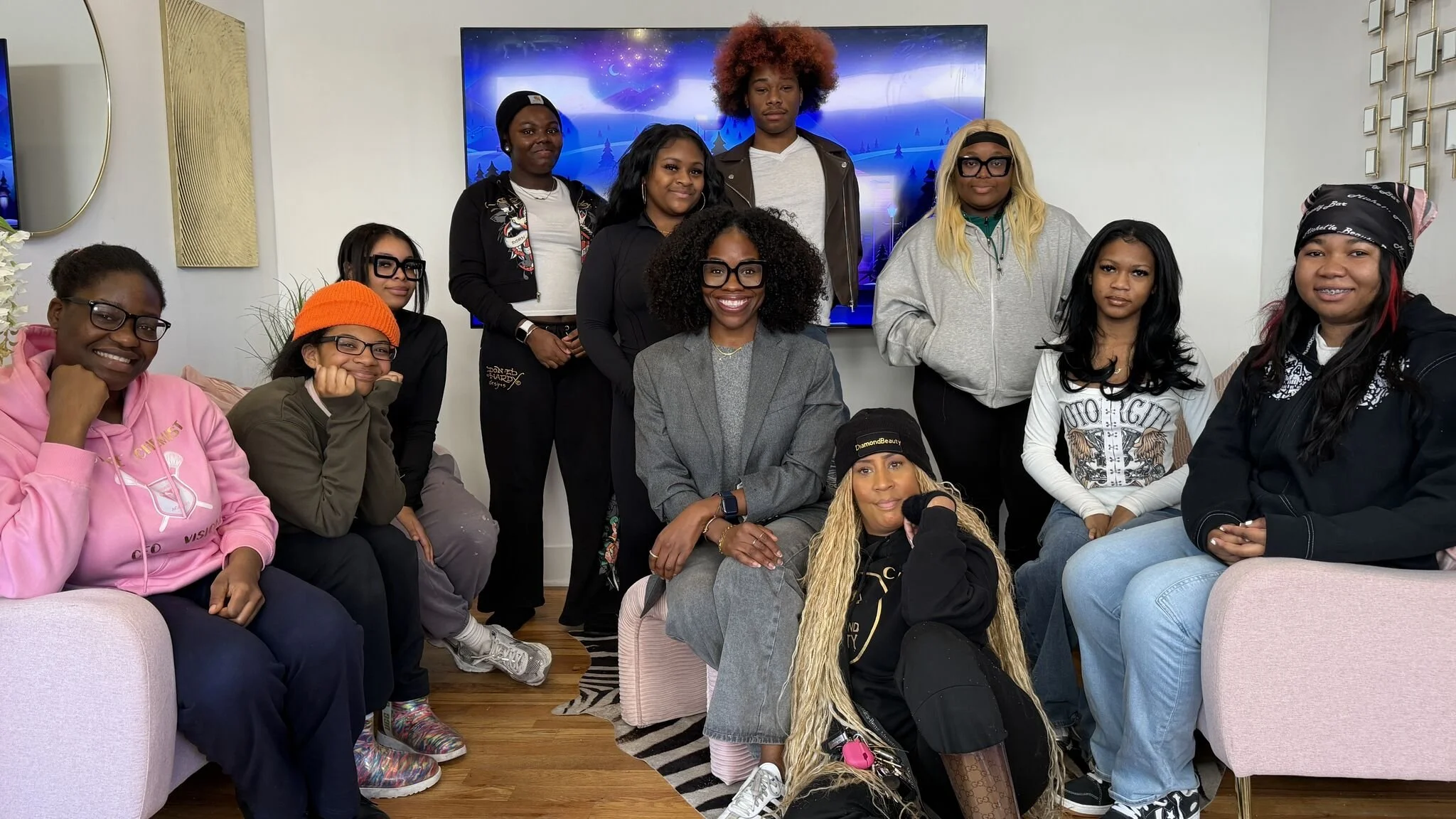
Client: Diamond Beauty Academy
Engagement: June 2026 · Pilot
Role: Communications Series Facilitator; Youth Leadership Communications Design
Context
We partnered with Diamond Beauty Academy to deliver a two-session communications series for young women participating in their youth beauty entrepreneurship program. Diamond Beauty Academy is a Philadelphia-based program developing the next generation of beauty industry entrepreneurs by equipping participants with the business acumen, brand identity, and industry knowledge to build ventures of their own.
As participants moved through the program and prepared to speak about their brands publicly, the Academy sought support to strengthen their communications presence in ways that were structured, practice-based, and immediately applicable without adding pressure to an already full and demanding curriculum.
The series served a cohort of approximately 14 young leaders between the ages of 14 and 17, each at varying stages of developing their brand voice and public presence. The approach was designed to meet each participant where they were: building on the confidence, directness, and identity they already carried while giving them the tools to bring it forward in high-stakes moments.
The Need
Diamond Beauty Academy is a cosmetic youth entrepreneurship program equipping young leaders with the business, brand, and beauty industry skills they need to build and sustain their own ventures. As participants prepared to present their brands publicly, what became clear was an opportunity to go deeper, not in the quality of their ideas, but in their ability to speak about them with confidence and clarity in real time, in front of real people.
What participants were navigating:
Limited experience speaking about their work in live, unscripted settings
Specific fears named by participants: forgetting their words, hyperventilating, being judged by peers. This created very real barriers before any skill-building could begin.
Histories of being told their voices were too much or not enough, which had shaped how they showed up in high-stakes moments
Heavy reliance on written notes and phones as a crutch for public speaking
A need for structured, low-stakes opportunities to practice before a real public moment
What was needed was not a confidence workshop. It was a structured communications experience designed to meet participants where they were, validating what they already carried while giving them tools to carry it further.
Our Role & Approach
We designed and delivered Present Tense, a two-session pilot communications series built specifically for young leaders preparing to speak publicly about their brands. The approach prioritized regulation before skill-building, private practice before public performance, and guided preparation over performance pressure.
Key elements of the approach included:
Private-to-public methodology: Guided prompts and structured practice progressions that moved participants from speaking to themselves, to one peer, to a small group, to the full room, lowering stakes at each stage so the nervous system could adjust before the next ask
Regulation before skill-building: A named, repeatable return-to move, a somatic regulation tool participants could use at any public moment, including graduation, practiced until it became automatic
The pitch framework: A pitch framework (ME → PROBLEM → SOLUTION → FUTURE) delivered with a facilitator-modeled example and written onto a notecard participants kept, providing structure without a script
Peer-based practice: A fishbowl practice format that separated the pressure of performing from the experience of watching, allowing participants to learn from peers before stepping into the center themselves
Strength-based feedback: Specific, observational feedback language modeled and practiced in the room, replacing generic praise with language that named exactly what worked so participants knew what to repeat
Responsive facilitation: Intentional session design adapted in real time to meet participants where they were, including extended time for trust-building in session one before any skill instruction began
Scope & Reach
Two 90-minute pilot sessions delivered in June 2025
Approximately 14 young leaders served across both sessions
7 participants completed the post-session survey
Sessions designed to complement Diamond Beauty Academy's existing business and brand curriculum
Outcomes & What Changed
Following the two-session pilot, observable and self-reported shifts included:
Increased confidence: 5 of 7 survey respondents named confidence — unprompted — as the primary shift they experienced across both sessions
Memory over script: Participants reported moving from scripted reading to speaking from memory, naming the ability to keep the same story and deliver it off the top of their head as a significant shift
Readiness to speak: 4.4 out of 5 average self-reported readiness to speak about their product to someone they did not know with 5 of 7 participants rating readiness at the highest level
Targeted next steps: Participants left with specific, named goals for continued practice, ,a sign they moved from general anxiety to targeted preparation
Relational trust: The group demonstrated strong peer support throughout both sessions, affirming each other with specific observational feedback and creating a room where practice felt safe
Illustrative Highlights
Participants who named the greatest fear at the start — including fear of being ridiculed by peers — were among those who volunteered to speak in the full-room fishbowl by session two
The room shifted from one where participants were reluctant to speak without a phone or script to one where participants were delivering pitches from memory and giving each other specific, affirming feedback
In their own words: "The difference is the newborn confidence instilled in me." "I can keep the same story and remember it off the top of my head." "I was nervous, but after talking about me and my product, I feel way more confident.
Why This Work Matters
This engagement reinforced that communications capacity-building is most effective when it is relational, practice-based, and grounded in a clear structure. For young leaders, and young women especially, preparation reduces anxiety. Knowing what you will be asked before you are asked it and having a structured place to practice is not scaffolding to be removed. It is the methodology.
Ethical, strength-based facilitation, strategic clarity, and peer-supported practice are not one-off skills. They require repetition, guided preparation, and individualized support. The most significant outcomes in this pilot were not the ones that showed up in survey scores; they were the ones that showed up in the room. A participant who came in afraid of being judged by her peers left as someone who went first.
This pilot reflects our broader approach to working with mission-driven organizations and the young people they serve: building communications capacity without adding burden, meeting participants where they are, and trusting that what they already carry is the foundation, not the starting line.
Current Availability
We are currently available for Present Tense series engagements, workshop facilitation, and communications curriculum design for programs working with young leaders. To explore how we may be able to support your organization, visit nicoleekenney.com/contact-us.